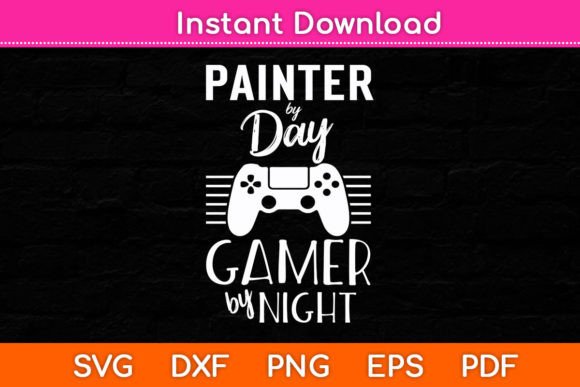
Painter by Day Gamer by Night Funny
As an embroidery designer who spends more time troubleshooting stitch errors than enjoying the final product, I approach every new design file with a mix of skepticism and curiosity. When I first pulled up Painter by Day Gamer by Night Funny, my initial thought was that it sounded like a niche novelty item—something you might see slapped on a discount t-shirt at a craft fair. However, after reviewing the vector structure and visual layout, I realized this is actually a clever play on dual identities that resonates deeply with modern hobbyists and professionals alike. This isn’t just text; it’s a conversation starter stitched into fabric.
The First Impression: Mood and Visual Personality
The core strength of this design lies in its relatability. We live in an era where side hustles and passions often define us as much as our day jobs do. The juxtaposition of "Painter" and "Gamer" creates an immediate narrative. For the viewer, it signals creativity during the day and competitive relaxation at night. Visually, the design relies heavily on typography to carry its weight, which means the success of the embroidery depends entirely on font choice, kerning, and legibility.
In terms of aesthetic, it feels casual yet intentional. It doesn’t scream for attention with loud graphics but rather whispers a personality trait. This makes it incredibly versatile. It works equally well for a serious artist who happens to love video games or a hardcore gamer who enjoys acrylics. The mood is lighthearted, personal, and distinctly millennial or Gen-Z focused. It avoids being overly childish while still maintaining a fun, approachable vibe that fits perfectly into the Crafts and Graphics categories where personality-driven products thrive.
Real-World Application: Where Does This Design Shine?
I recently considered using Painter by Day Gamer by Night Funny for a custom order destined for a boutique shop specializing in personalized gifts for creative entrepreneurs. Here is how I envision this design performing across different mediums:
- Sweatshirt Embroidery: This is perhaps the strongest use case. A crewneck sweatshirt in heather grey or black provides the perfect backdrop for this kind of witty statement. The soft texture of the fleece contrasts nicely with the precision of machine embroidery, making the text pop without feeling too rigid.
- Tote Bag Design: Canvas totes are staples for artists carrying their supplies. Placing this phrase on the front pocket or center panel of a tote bag turns a utilitarian item into a brand identity piece. It tells other shoppers exactly what kind of person is carrying it.
- Embroidered Patch: Creating a detachable patch allows the buyer to customize their own gear. Whether they attach it to a backpack, a denim jacket, or a gaming chair cover, the versatility is high. Patches also allow for more creative thread color choices since you aren't restricted by the garment's base color.
- Kitchen Towels and Aprons: For the painter who cooks, or the gamer who needs a break from the screen, a kitchen towel with this design adds a touch of humor to domestic chores. It’s a great low-cost entry point for customers browsing an Etsy listing.
For small business owners and Etsy sellers, this design offers excellent commercial potential. It targets a specific demographic that values both artistic expression and digital entertainment. By offering this as part of a bundle—for example, pairing it with a paintbrush icon or a controller graphic—you can increase the average order value.
Technical Considerations and Stitch Clarity
When evaluating any machine embroidery design, I always look at the stitch density and the complexity of the lettering. Since this design is primarily text-based, the risk factor is lower than with intricate pictorial designs, but the margin for error regarding readability is slim. If the letters are too close together or the stroke width is inconsistent, the design will look muddy after stitching.
Here are some practical notes for designers preparing to digitize or edit this file:
- Stitch Density: Ensure the stitch density is appropriate for the fabric. On thin cotton, dense satin stitches can pucker the material. Consider using a lighter fill stitch or adjusting the underlay to prevent distortion.
- Hoop Size: Check the dimensions carefully. If you plan to embroider this on a cap or a curved surface, ensure the hoop size accommodates the curve without stretching the fabric unevenly. Tight curves can distort straight lines of text.
- Thread Colors: Contrast is key. White or light yellow thread on dark fabric will make the message stand out sharply. Conversely, pastel threads on light fabrics may require a shadow stitch or a darker background layer to maintain visibility.
- Stabilizer Choice: Always use a proper stabilizer. For stretchy fabrics like sweatshirts, a cut-away stabilizer is non-negotiable to maintain shape over time. For woven cottons, a tear-away might suffice for lightweight applications, but wash tests are recommended.
Where to Use With Caution
While this design is versatile, there are scenarios where it might not perform as well. Avoid placing this on highly textured fabrics like heavy bouclé or rough burlap, as the details of the lettering will get lost. Similarly, be cautious with very small hoop sizes. If the design is scaled down too much, the distinction between the words "Painter" and "Gamer" might blur, defeating the purpose of the contrast.
Additionally, consider the end-user’s lifestyle. If this is intended for a child’s clothing, ensure the font style is readable and age-appropriate. For adult merchandise, the current design strikes a good balance. However, if you are targeting a corporate audience, this might be too informal unless the company culture is explicitly relaxed and creative.
Final Verdict: A Smart Addition to Your Library
Painter by Day Gamer by Night Funny is more than just a novelty phrase; it is a well-crafted reflection of modern identity. For designers looking to expand their catalog, this design fills a gap between art supply branding and gaming culture. It appeals to the handmade product market’s desire for authenticity and personal connection.
If you are an embroidery project enthusiast or a craft business owner, I recommend testing this design on scrap fabric before committing to production. Check the thread colors against your most popular garment shades. Create a few printable mockups to visualize how it looks on different products. Once you confirm the clarity and appeal, you’ll find that this design has strong potential to become a bestseller in your shop. It’s simple, effective, and speaks directly to the heart of the creative gamer community.